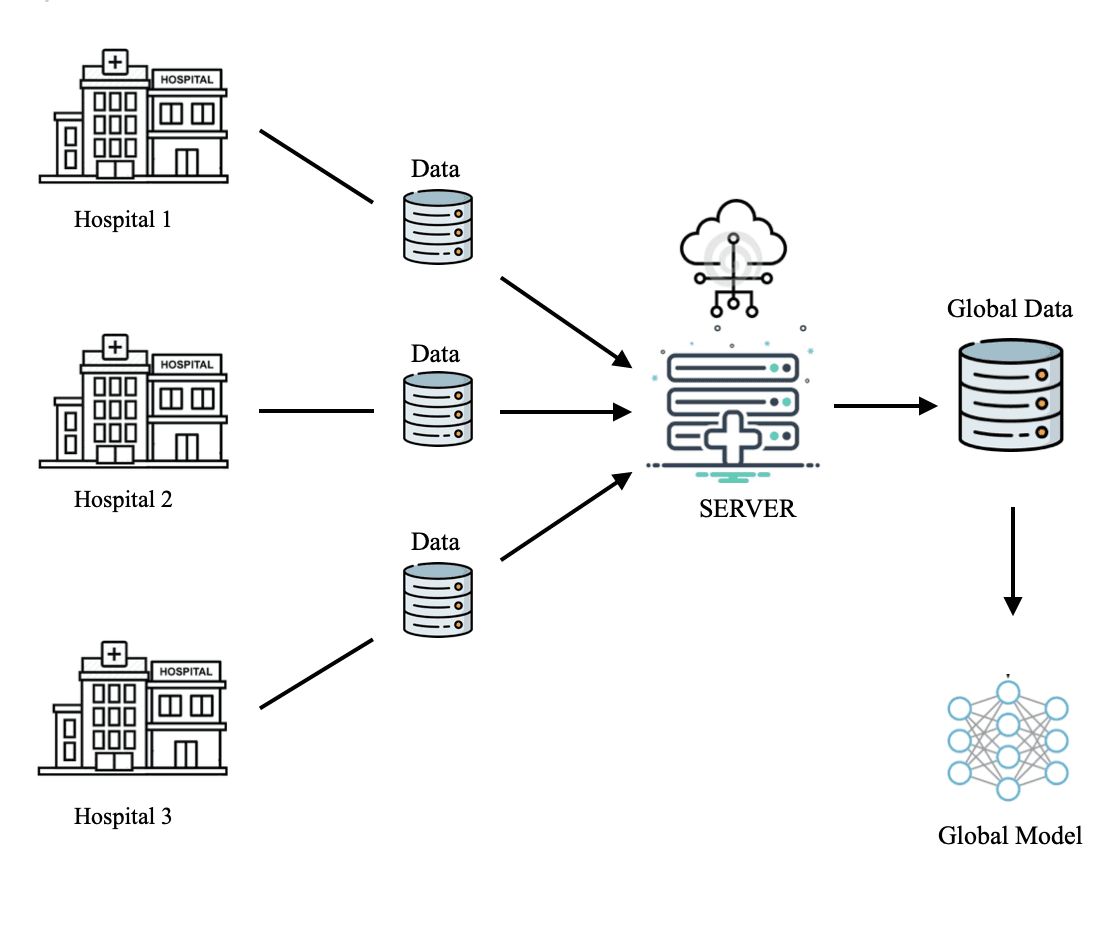

Client For :
Helmholtz Munich, Germany
Service :
Summer Research Intern
(DAAD WISE Scholar)
Overview
Filtration curves in topological data analysis (TDA) applied to single-cell RNA sequencing (scRNA-seq) data refer to a process of studying the shape and features of high-dimensional gene expression data across multiple scales. This approach uses algebraic topology tools, such as persistent homology, to capture and quantify the multi scale topological features (like connected components, loops, and voids) that persist throughout a sequence of nested spaces generated by varying a filtration parameter.
Challenges
The key technical challenges that may need to be addressed include:
Designing an appropriate federated learning algorithm and client update strategy.
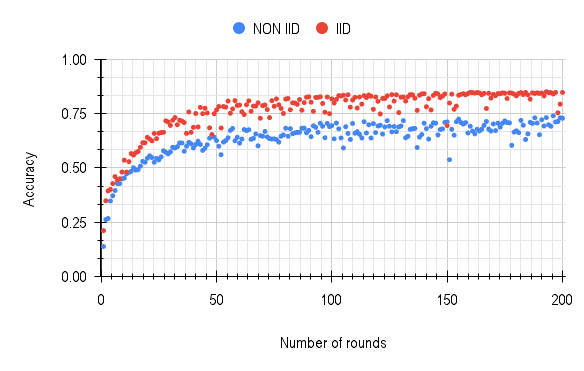
Handling client heterogeneity and non-i.i.d. data distributions.
Optimizing the communication efficiency and reducing the overall training time.
Evaluating the model performance and generalization capabilities.
Ensuring the privacy and security of the federated learning process.
Results/Conclusion :
The model has yield promising insights into the effectiveness of decentralized learning paradigms. The metrics offer valuable insights into the convergence, generalization, and predictive accuracy of the model across distributed datasets.